Jacob and Israel: Beyond Borders — The Spiritual Legacy Misunderstood
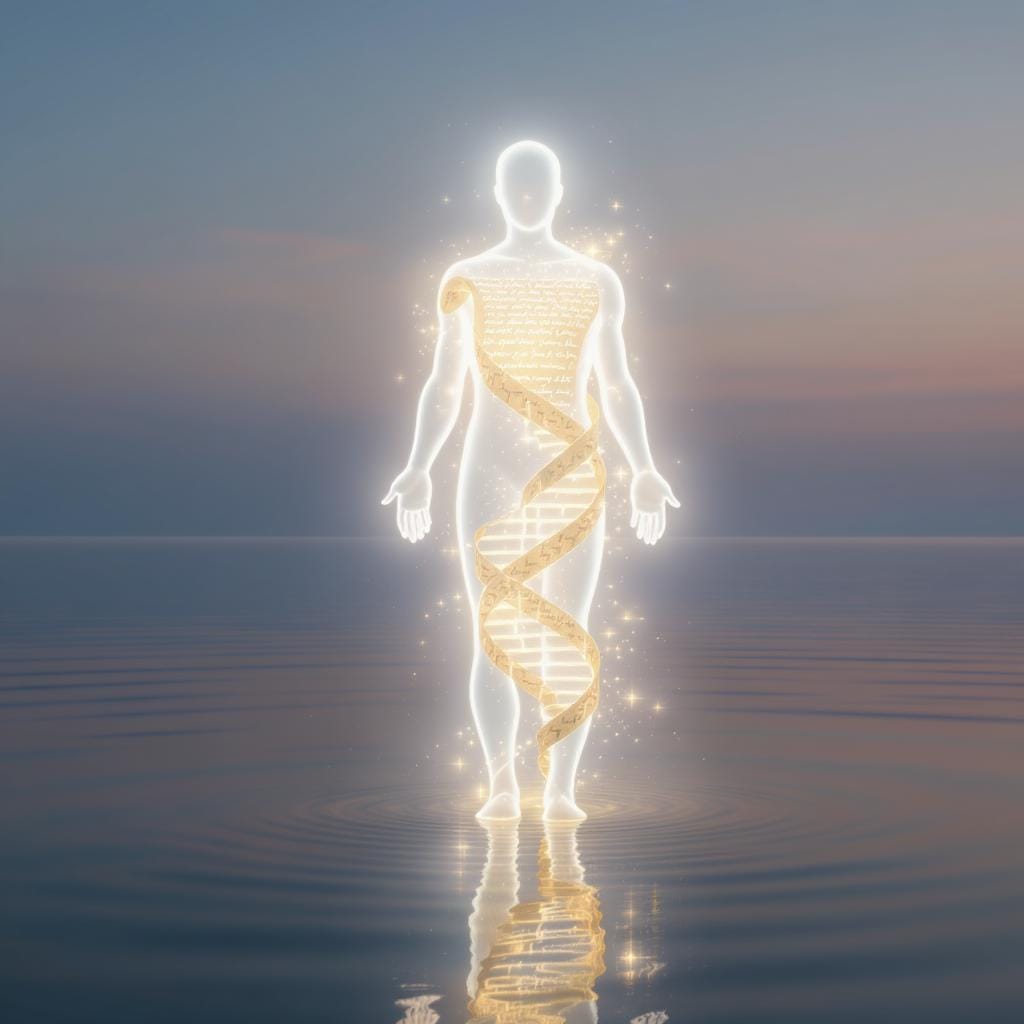
The spiritual meaning misunderstood.
In many conversations, the names Jacob and Israel immediately summon images of land, nation, and ethnic identity. We think of maps, borders, tribes, and history—often rooted in politics or heritage. Yet beneath these familiar associations lies a far deeper, more transformative story that has been overlooked or misunderstood for centuries.
The story of Jacob becoming Israel is not primarily about territory or genealogy. It is a sacred allegory for the soul’s agon—the struggle and transformation that births a new spiritual identity.
And here is the greater mystery: the promises of land, the stretch “from the river of Egypt to the great river, the Euphrates” (Genesis 15:18), were never mere coordinates. These boundaries symbolized something vast—the reach of the spiritual path, the breadth of the soul’s inheritance, and the inclusive calling of all who would walk this way.
Israel, then, is not a plot of earth.
It is a becoming—a sacred identity that unfolds across time and nations. A name given not by bloodline, but through the fire of divine encounter.
Boundaries as Thresholds
Throughout the Hebrew scriptures, boundaries of land, temple, and covenant appear as concrete markers. But beneath the surface, they act as thresholds—not to keep others out, but to delineate stages of transformation.
When Genesis speaks of the promised land stretching from Egypt to the Euphrates, it’s not just geopolitical language—it is metaphysical cartography. These distances reflect how far and wide this struggle would unfold, how many would walk it, and how deeply it would reshape those who do.
In Exodus, the children of Israel don’t merely leave Egypt—they are undone in the wilderness. Their old identities fall away. They’re made into a people not by escape, but by encounter. In Joshua, the land is portioned not for possession but for participation, “by lot”—a surrender to divine order, not conquest by personal claim.
And in Isaiah 56, we hear this astounding promise:
“Let no foreigner who is bound to the Lord say,
‘The Lord will surely exclude me from His people.’ …
My house will be called a house of prayer for all nations.”
So when Scripture speaks of Israel stretching from the Nile to the Euphrates—it is speaking of magnitude, not monopoly.
Of inclusion, not exclusion.
Of souls drawn in, not strangers kept out.
The land promise is inseparable from the inner process. The inheritance is not tribal supremacy, but soul expansion. The borders are not for division—but for invitation. And just as the temple veil was torn to reveal that the sanctuary was no longer confined to a physical space, so too the name Israel was never meant to be confined to a single people. It belongs to all who step into the agon—who wrestle with the divine and emerge reborn.
Wrestling and Renaming
The name Israel is born in a night of crisis.
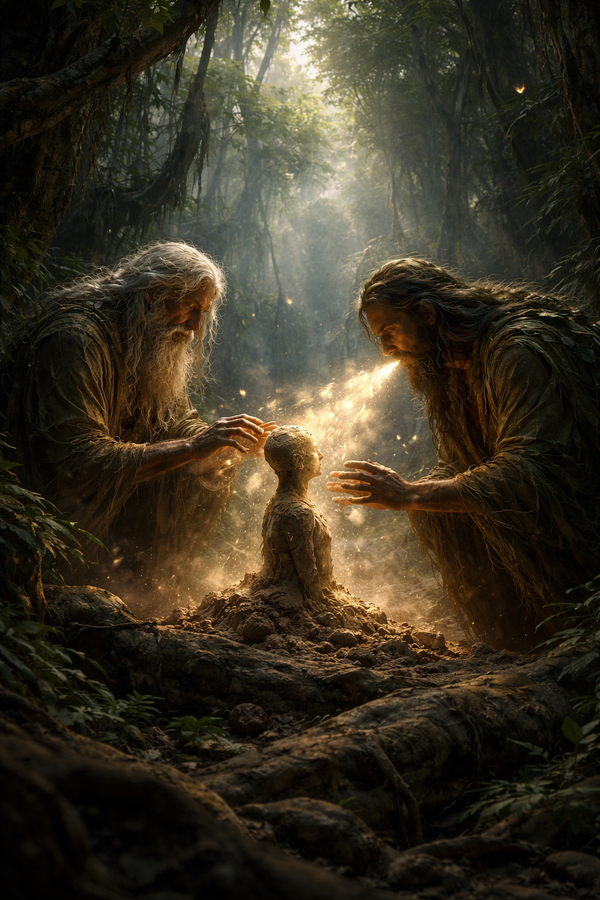
Jacob, after years of deceiving and being deceived, finds himself alone, stripped of control, and about to face the brother he once betrayed. That night, a mysterious figure wrestles with him until dawn. He is wounded—but refuses to let go without a blessing.
And then comes the renaming:
“Your name shall no longer be called Jacob, but Israel,
for you have struggled with God and with men and have prevailed.”
— Genesis 32:28
This is the crux of the matter.
Israel is not a reward for perfection—it is a name given to those who enter the struggle and do not turn away. It is the sacred title of those who have been undone and remade. It is the limp that testifies to the encounter.
Becoming Part of Israel
The prophetic vision was never one of exclusion, but of expansion.
Isaiah foresaw a time when “Egypt my people, Assyria the work of my hands, and Israel my inheritance” would be joined (Isaiah 19:25).
Ezekiel wrote of “foreigners who have settled among you and who have children—you are to consider them as native-born Israelites” (Ezekiel 47:22).
This is not just political tolerance—it is metaphysical adoption.
Through the agon, through wilderness and unmaking, people from every tribe and tongue become part of this lineage—not by blood, but by burning.
Living the Agonic Path Today
In the same way the Israelites were led through water, wilderness, and transformation—not just to inherit land, but to inherit identity—so too are people today being drawn from every land into this same process.
Through struggle, inner dying, and awakening, they too become Israel.
This is the real gathering: not of tribes by birth, but of souls by fire.
Not all who are born into the lineage bear the name spiritually. And not all who are born outside of it remain outside. The agon reorders everything.
And those who endure it—who wrestle, who are wounded, who walk with a limp and a new name—carry within them the ancient fire of the patriarchs.
Final Word: The Stretch of Spirit, Not Soil
The transformation of Jacob into Israel is not an isolated event.
It is the template.
And just as the land was said to stretch beyond borders, so too the name Israel stretches beyond genealogy.
It is for the wrestlers.
The ones who enter the night and do not come out the same.
The ones who say, I will not let You go unless You bless me.
The ones who, through the agony of transformation, become sons and daughters of the promise.
This is what it means to become Israel.