The Religion Paradox Sophia, the Demiurge, and the Misreading of Blood
There is a tension inside modern Christianity that cannot be resolved from within its own vocabulary.
It is a tension that remains invisible until something inside a person begins to remember.
For a long time the story appears simple:
God is holy.
Humans are sinful.
Jesus dies as a sacrifice.
His blood covers those who believe.
But beneath this narrative lies an older and more interior architecture — a memory whispered in the soul itself.
Once that deeper structure stirs, the simplicity begins to fracture.
What seemed like one seamless theology reveals itself as two cosmologies laid on top of each other:
the sacrificial logic of the ancient world,
and
the Sophianic logic of awakening and return.
Modern belief sits in the split between them.
1. The Ancient Logic of Sacrifice: Binding Oneself to the God of the Altar
In the ancient world — sacrifice carried a clear meaning.
The victim was not the active agent.
The deity receiving the blood was.
To sacrifice meant to:
• bind oneself to that deity
• accept the deity’s jurisdiction
• enter its economy of law, power, and protection
• align one’s fate with the being who claimed the altar
You did not align with the one placed on the altar.
You aligned with the one who demanded it.
This is the logic modern evangelical language inherits when it speaks of being “washed in the blood,” yet it attempts to weld that logic to a different figure — Jesus — without recognizing the conflict of systems.
In the ancient world, blood anchors you to the god who requires it.
It never liberates you from him.
2. Sophia and the Demiurgic Frame: The World Shaped by Forgetfulness
The other framework is older still — the Sophianic memory preserved in the Valentinian imagination.
Creation begins not in malice but in misalignment:
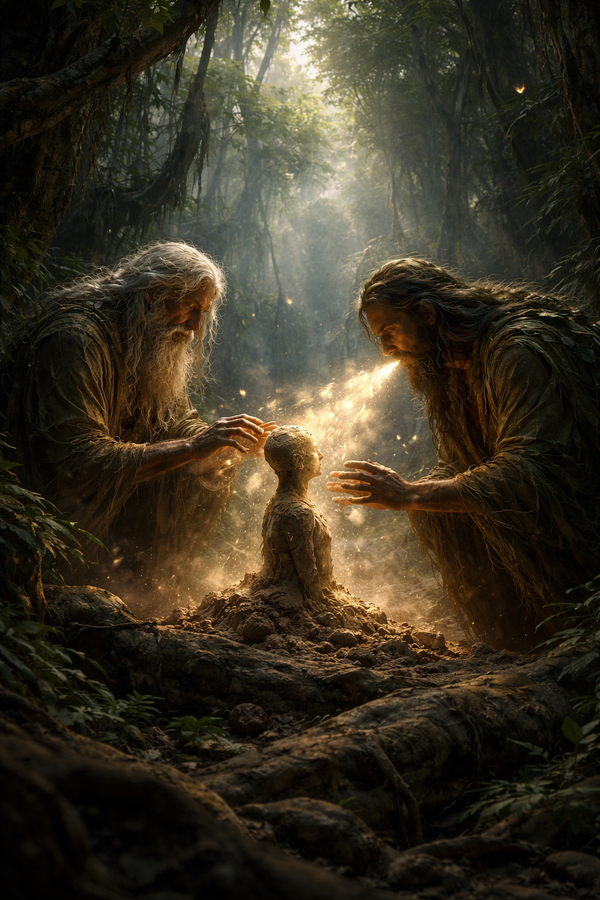
Sophia, yearning to bring forth without her syzygy, generates a being unable to perceive the fullness from which she descended.
This being, the craftsman, constructs the world according to his own limited sight:
• order without wisdom
• law without mercy
• judgment without inner knowing
• power maintained through fear and certainty
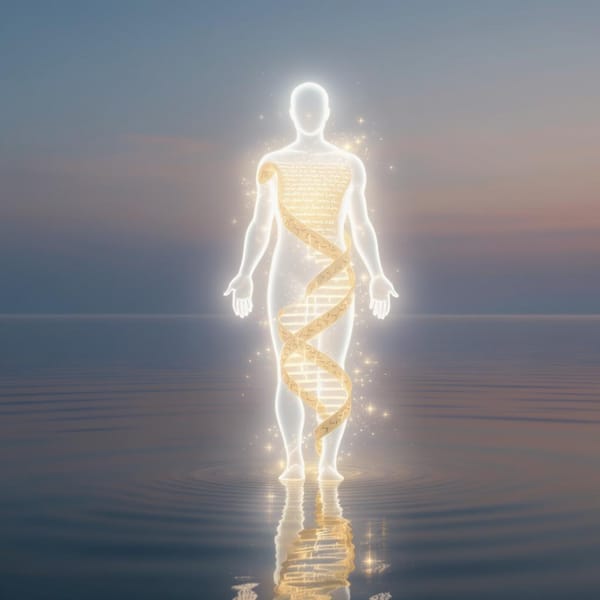
But "Sophia", moved by compassion, implants something of herself into the forms the craftsman shapes — a seed, a memory-fragment, a spark of the higher Light.
Because of this spark, humans:
• sense a home they cannot name
• resist a god-image built on fear
• ache for what they never learned yet somehow recall
• feel misaligned inside systems that demand sacrifice, purity, and appeasement
Evangelical language calls this ache “needing salvation.”
The Sophianic view calls it remembering.
Here the first fracture appears.
3. Jesus in the Valentinian Frame: The Revealer Who Reorients the Heart
Into this world Jesus arrives not as a payment in a system of law,
but as the Logos of the Pleroma clothed in gentleness.
His role is not appeasement.
His role is remembrance.
The Valentinian Christ does not negotiate with the Demiurge;
He illumines the spark, awakening what Sophia hid in humanity.
In these texts Jesus:
• reveals the higher Source beyond law and fear
• restores the soul’s memory of its origin
• speaks the language of the heart instead of the language of the altar
• unbinds the imagination from sacrifice and wrath
• shows that liberation comes through knowing, not appeasing
His “blood” is not a payment to a lower power.
It is light entering density, the descent of compassion into form.
To “invoke the blood” in a Sophianic sense is simply to say:
The light within me awakens.
I turn from fear toward memory.
I realign with the Source that never needed a sacrifice.
This is the opposite of the sacrificial logic it is often made to reinforce.
4. Two Incompatible Logics
Placed side by side, the distinction becomes unmistakable.
In the sacrificial logic:
• a god demands blood
• a victim dies
• the people align with the god who demanded it
• fear enforces obedience
• wrath governs the economy of love
In the Sophianic logic:
• the true Source demands nothing
• Jesus dies to reveal, not to repay
• awakening dissolves fear
• law is held inside mercy, not above it
• the spark already binds the soul to a higher realm
Evangelical theology merges these two stories and calls them one.
But the underlying assumptions clash.
When Christians speak of “satisfying justice” or “appeasing wrath,”
they echo the imagination of the limited craftsman, not the Infinite.
Here the paradox sharpens.
5. Are evangelicals aligning with a god they think is another?
From a symbolic Gnostic and Kabbalistic perspective, this is the piercing question. If the god who demands sacrifice is the lower architect, and the Source beyond him does not require blood, then what happens when a religion builds itself around blood, law, and appeasing wrath? It aligns, psychologically and ritually, with the lower pattern while believing it is worshipping the Highest.
In the old world, you can identify a deity by what it requires.
The more limited the power, the more it demands.
The Infinite asks for nothing.
The lesser powers ask for offerings.
The most limited ask for blood.
So when a religious system builds itself around:
• substitution
• debt-payment
• appeasing wrath
• fear of punishment
• obedience under threat
it does not arise from the consciousness of the Pleroma.
It reflects a pattern —
a fragment of divinity mistaken for the Whole,
a dependent power misunderstanding itself as ultimate.
The heart reaches for Jesus the Revealer,
but the story interpreting Him belongs to the world He came to illuminate.
This is the paradox.
6. The Kabbalistic Mirror: Severity Without Union
Lurianic Kabbalah offers a similar pattern.
When Gevurah (judgment, severity) becomes unbalanced by Chesed (mercy),
it behaves like an isolated deity:
jealous
punitive
legalistic
obsessed with purity and debt
This face resembles the demiurgic imagination —
law without compassion, fear without wisdom.
But the Ein Sof, the Infinite,
has no need for payment and no economy of wrath.
A soul raised inside imbalance may mistake the fragment for the Source.
It may interpret Christ through fear, even as Christ calls it beyond fear.
Again, the tension widens.
7. What the Spark Remembers
Yet within this tension, the Sophia-spark persists.
It carries no doctrine, only a resonance,
a recognition that:
• the true Source does not demand blood
• the true Source does not threaten its own creation
• the true Source is not scarcity, wrath, or debt
• love is not conditioned by violence
When this resonance awakens, the sacrificial framework begins to feel foreign.
The soul senses a mismatch between what it has been told
and what it has always known.
This is the spark flaring,
the first coil of the Agonic Spiral turning toward Light.
8. Israel as the One Who Sees
Philo said: Israel is the one who sees God.
The Zohar adds: Anyone who sees becomes Israel.
In the Agonic Spiral, this is the movement from:
fear → sight
law → mercy
ignorance → memory
fragment → fullness
Israel is not a border or bloodline.
It is the name given to the soul that has wrestled —
Eros purified, Thymos awakened, Logos illumined.
It is the turning of the inner eye toward the Presence beyond fear.
The Paradox in Its Final Form
Christians today reach with honest longing for the true Light.
Their devotion is real,
their yearning sincere.
But the story they inherited is built from two incompatible imaginations.
They call upon the Revealer,
yet interpret Him through the logic of the craftsman.
Awakening is not rebellion against faith but
it is fidelity to the spark placed within them before belief was ever taught.
The work is not to condemn,
but to see.
Not to banish the old story,
but to recognize the deeper one shining beneath it.
The Divine has nothing to do with fear.
And the soul remembers this, even when the mind does not.
The Spiral continues.
The light widens.
The heart ascends by remembering.